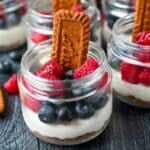
Mini Biscoff Cheesecakes
A no-bake high-protein recipe for single-serving cheesecakes with a simple 2-ingredient Biscoff cookie crust.
Servings 6
Calories 305kcal
Equipment
- parfait dishes or glass jars with lids I use the wide-mouth 8-oz jars so there's room for topping with berries. Parfait dishes work great here, too.
Ingredients
- 12 Biscoff cookies
- 4 tbsp butter melted
- .25 oz unflavored gelatin (1 packet)
- ¼ cup water
- 8 oz low-fat cream cheese softened to room temp
- 1 cup low-fat plain skyr *or plain Greek yogurt
- 1 cup Good Culture cottage cheese whipped *I use a stick blender and blend it right in the container
- ¼ cup Splenda sugar blend *see notes for other sweetener options
- 2 tsp vanilla extract
- Optional topping: fresh berries and/or drizzle of Biscoff spread
Instructions
- Place the cookies into a food processor and blitz until finely ground. Drizzle in the butter and process until combined. The texture should be similar to wet sand. Divide the crust mixture between the jars or dessert dishes and press down to compact. Refrigerate the jars to chill the crust while you make the filling.
- Bloom the gelatin in ¼ cup of water and let it sit for 5 minutes, then warm for 15-20 seconds in the microwave until dissolved. Stir and set aside.
- In a large bowl, beat the cream cheese, Skyr (or Greek yogurt), whipped cottage cheese, sweetener, and vanilla until smooth and creamy. *I use the whisk attachment on my stand mixer.
- Slowly beat in the gelatin mixture, pouring in a thin stream, until combined.
- Divide the cheesecake filling evenly between the jars. Chill for at least 6 hours, preferably overnight, until firm and set.
- Top with fresh berries (I use the 8-oz jars so I have room for this) and drizzle with a little honey or melted Biscoff spread, if desired.
Notes
*You can use a piping bag with a large Wilton 1A tip or a Ziploc bag with the tip cut off to swirl the filling into the jars, or simply spoon it into the jars if preferred.
- Blitz the cookies until they’re very finely ground. Larger chunks won’t compact properly and can cause the crust to crumble. In comparison, a fine crumb creates a sturdy, bakery-style crust.
- Aim for a “wet sand” texture. Add just enough melted butter so the crumbs look damp but not shiny and hold their shape when pressed – too little and the crust won’t hold, too much and it’ll feel greasy.
- Don’t rush blooming the gelatin. This step fully hydrates the gelatin, ensuring it dissolves smoothly rather than clumping. Let it sit undisturbed for the full 5 minutes before heating it just until warm and fluid, not hot or bubbling.
- Take the extra minute to thoroughly whip the cottage cheese before adding it. This step is crucial for achieving that classic cheesecake texture without any curds or unpleasant graininess.
- Slowly streaming the bloomed gelatin while mixing helps emulsify it. Once incorporated, the filling should look glossy, smooth, and slightly looser than traditional cheesecake.
- Sweetener options. The Splenda sugar blend sweetener conversion is 1/4 cup of the Splenda blend for 1/2 cup of regular sugar. If you make a sweetener swap, you’ll need 1/2 cup of another sweetener of choice (if using a granulated sweetener, go with white sugar or a white sugar substitute). I’ve also made this recipe with 1/3 cup good-quality maple syrup with great results. It will be a softer set before chilling, but it firms up nicely as it chills overnight. Honey can be used instead of maple syrup, if preferred.
Nutrition
Calories: 305kcal | Carbohydrates: 25g | Protein: 14g | Fat: 18g | Saturated Fat: 10g | Polyunsaturated Fat: 1g | Monounsaturated Fat: 3g | Trans Fat: 0.3g | Cholesterol: 40mg | Sodium: 382mg | Potassium: 124mg | Sugar: 19g | Vitamin A: 442IU | Calcium: 83mg | Iron: 0.1mg